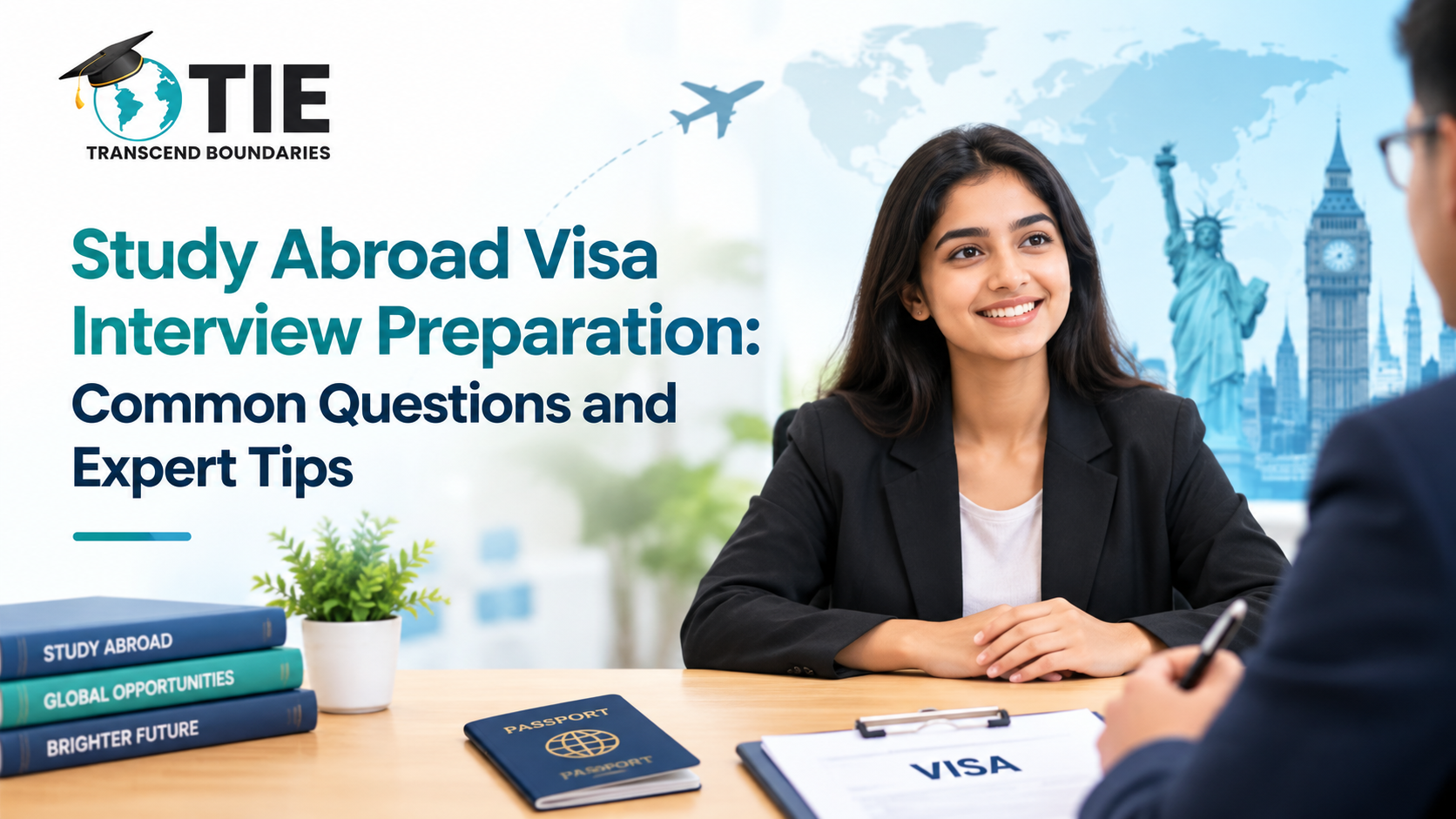
Study Abroad Visa Interview Preparation: Common Questions and Expert Tips
Taksheela Team
Taksheela Institute of Education
A strong application can still leave you nervous about one part of the process: the visa interview. You may have your university offer, financial documents and other paperwork prepared, but being able to answer questions confidently in a short conversation is another challenge.
Students should know their course, university, finances and study plans sufficiently to answer clearly. Good study abroad visa interview preparation helps you understand what the visa officer may ask, organize your answers and avoid common mistakes.
What Is the Visa Officer Actually Trying to Understand?
A visa interview is not simply a test of how well you can speak. The officer might be trying to verify the authenticity of your study plans and whether your responses are in sync with those of your application.
Your answers should show that you:
Understand the course you have chosen
Know why you selected the university and destination
Have a realistic plan for funding your education
Can explain your academic background
Have thought about your plans after completing the course
Are familiar with the information in your application
You do not need lengthy explanations for every question. Clear and relevant answers are more useful than memorized speeches.
Which Visa Interview Questions Should Students Prepare For?
There is no set list of questions that every student will receive. Questions may differ according to destination, application and personal circumstances. Overseas education consultants in India can help students understand common interview topics, review their study plans and prepare clear, consistent answers. Preparing around these key areas can help you handle a wider range of visa interview questions.
Questions About Your Course
Why did you choose this course?
How does it relate to your previous education?
What subjects or modules will you study?
What skills do you expect to gain?
Why did you not choose a similar course in India?
How long is the program?
Why did you choose this course at this stage of your career?
Questions About Your University
Why did you choose this university?
Which other universities did you consider?
Why did you choose this university over the alternatives?
What do you know about the university?
How did you select the university?
Questions About Your Destination
Why did you choose this country?
Why do you want to study abroad?
Why not study in India?
What attracted you to this destination?
What do you know about the city where you will live?
Do you have family or friends there?
Questions About Your Finances
Who is funding your education?
What does your sponsor do?
What is your sponsor’s source of income?
How much does your course cost?
How will you cover your living expenses?
Have you taken an education loan?
Have you received a scholarship?
Where will you stay?
Questions About Your Academic or Personal History
Why did you choose a different field from your previous degree?
Can you explain your study gap?
What have you been doing since your last qualification?
Why are you returning to education after working?
Have you previously applied for a visa?
Have you ever had a visa refused?
What Tips Can Help You Answer Visa Interview Questions Better?
Knowing what the questions are is only half the battle. Your answers must also be direct, relevant, and consistent with your application.
Your answers should be direct. In answering the question about your choice of a certain course, begin by stating your primary reason rather than telling your entire background.
Connect your course to your background. Be ready to explain the program in relation to your past educational experience or career plans. If you are changing fields, have a clear explanation.
Know your course and university: Review the course structure, duration, location, qualification and other information you used while making your decision.
Know your financial figures: Be familiar with your tuition fees, payments already made, funding source, education loan if applicable, and expected living expenses.
Keep your answers consistent: Information you provide during the interview should not conflict with your application or supporting documents.
Don’t memorize complete sentences: Prepare key points instead. This makes it easier to answer naturally when the officer phrases a question differently.
Don’t provide unnecessary information: Respond to what has been asked and elaborate only if required.
Ask for clarification if required. If you do not understand the question being asked, kindly ask the police officer to clarify it rather than answering something else.
What If the Visa Officer Asks a Difficult or Unexpected Question?
Getting asked a question you didn’t expect doesn’t mean your interview is going badly.
Understand the question carefully and answer it according to your own situation. If the question relates to a study gap, academic change, previous visa refusal or financial issue, avoid trying to hide relevant information or creating an explanation that does not match your documents.
The goal is not to produce the perfect answer. It is to give a truthful, understandable response that fits your application.
What Are Common Visa Rejection Reasons Students Should Avoid?
Visa decisions are made on the basis of requirements and circumstances specific to the destination and application. However, students should take care with:
Inconsistent information between answers and documents
Poor understanding of the chosen course or university
Unclear explanation of study plans
Inadequate or unclear financial information
Unexplained academic or personal history
Providing inaccurate or misleading information
Students should review the relevant visa requirements for their destination rather than relying on general assumptions about visa rejection reasons.
How Can You Practice for a Student Visa Interview?
Practice should help you become more comfortable with answering, not turn your responses into a script.
Write down likely questions and a few key points for each answer. Then practice speaking without reading from your notes. Ask a friend, family member or counselor to conduct a mock interview and include questions you have not prepared for.
You can also record yourself answering common questions. Listen for answers that are too long, unclear or repetitive and simplify them.
The goal of visa preparation is being able to explain your own application comfortably rather than memorizing dozens of model answers.
What Should You Carry and Review Before the Interview?
Before the interview, check over:
Your visa application information
Offer of place/admission documents
Course Details
History of tuition fee and payment
Documents on finances and sponsorship
Details of Education Loan/ Scholarship if any
Accommodation Information
Academic Credentials
ID and passport needed
How Can Students Avoid Sounding Over-Rehearsed?
Preparation and memorization are not the same thing. A student who has memorized a paragraph may struggle if the officer asks the same question differently.
Instead, prepare the facts and reasoning behind your major decisions. Know why you chose the course, university and destination, understand your finances and be ready to explain your academic history.
Practice different ways of answering the same question, so you become comfortable discussing the topic rather than reciting one fixed response.
How Can Overseas Education Consultants in India Help With Visa Preparation?
Students can prepare themselves, but professional assistance is useful to identify any weaknesses that need attention before the interview. The Taksheela Institute of Education can assist students in reviewing their selection of courses and universities, and practicing their answers through mock interviews.
Students who are looking for overseas education consultants in India can also use counseling services to review their financial documentation, study plans, and any other area that needs clarification.
Students who are searching for overseas consultancy in Bangalore will need to prepare themselves based on their personal applications and not from generic interview answers. We at Taksheela Institute of Education can assist you in preparing by knowing what you need to say.
FAQs
How long should a student visa interview answer be?
Keep your answer focused on the question. Give enough information to explain your point without turning a simple question into a long speech.
What should I do if I don’t understand a visa interview question?
Politely ask the officer to repeat or clarify the question before answering.
Can nervousness cause visa rejection?
Being nervous does not automatically mean a visa will be refused. Focus on answering clearly and truthfully.
Should students memorize answers before a visa interview?
It is better to prepare key points than memorize complete answers. This allows you to respond naturally when questions are phrased differently.
What if my financial situation has changed since I applied?
Review the relevant visa requirements and be prepared to explain the change accurately. Keep supporting financial documents updated where required.
Free MBBS Counselling
Find the Right Country for Your MBBS in 2026
Our MBBS specialists analyse your NEET score, budget and career goals to recommend the right university — at zero cost to you.
Related Articles
Planning your study abroad journey?
Get free expert counselling from Taksheela — trusted by thousands of Indian students for admissions, visas, and test prep.
You May Also Like
More Study Abroad & Education Guides
Study Abroad Budget Planning 2027: Tuition Fees, Living Costs and Other Expenses
22 Oct 2026 · 16 min
Study Abroad Education Loans in 2027: Eligibility, Documents and Repayment Options
21 Oct 2026 · 15 min
Countries With the Best Post-Study Work Opportunities for Indian Students
26 Sept 2026 · 15 min