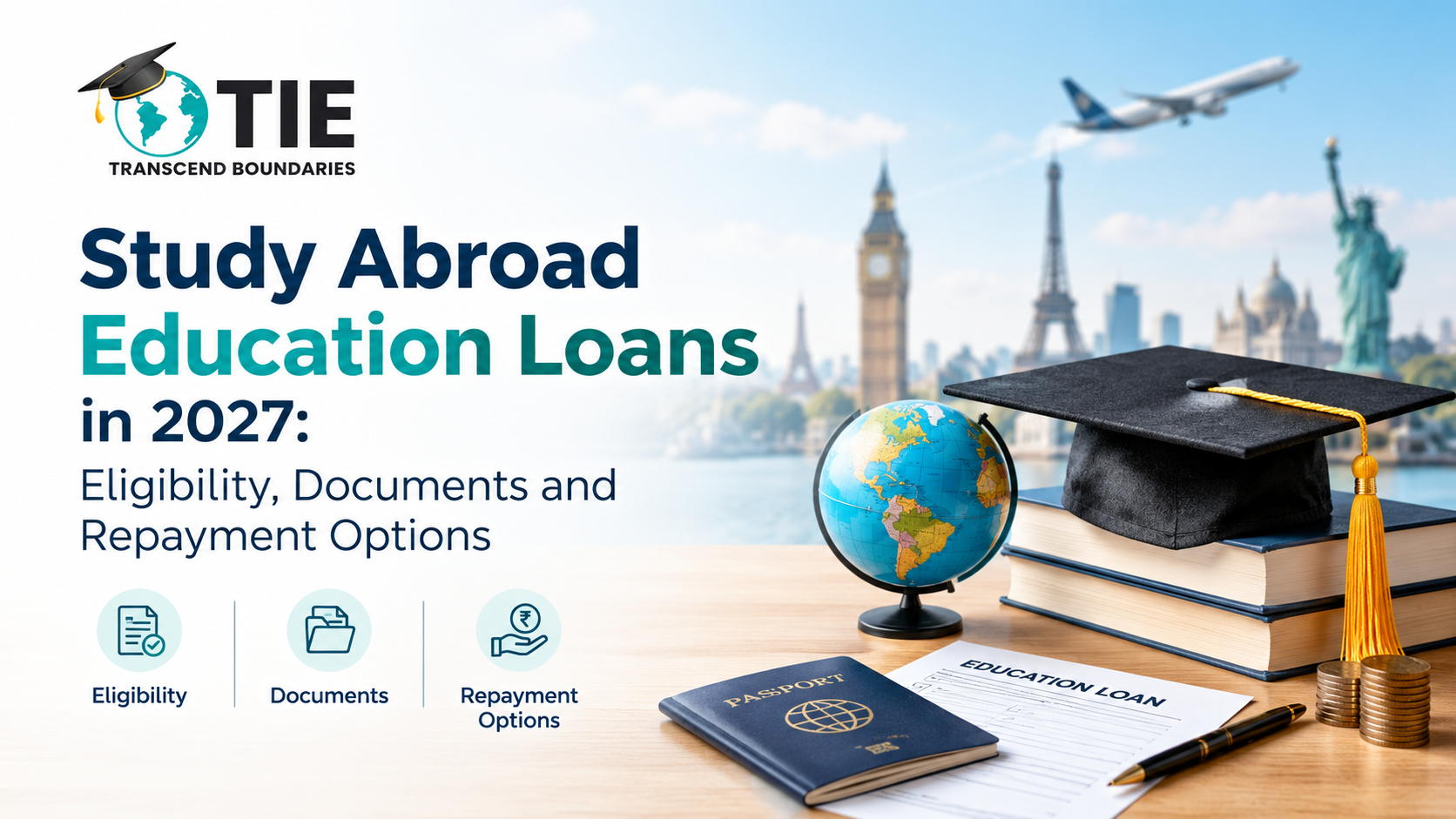
Study Abroad Education Loans in 2027: Eligibility, Documents and Repayment Options
Taksheela Team
Taksheela Institute of Education
A study abroad education loan isn't only about tuition anymore. It can cover living costs, travel and insurance too. For a lot of students, it's one of the main ways to fund an international education in 2027.
Eligibility, documents, repayment: every step affects what you end up paying. An education loan for abroad studies also known as anoverseas education loan or student loan can be availed for eligible expenses as per the terms of the lender. Taksheela Institute of Education guides students to explorestudy abroad funding and plan their finances.
How Does a Study Abroad Education Loan Work?
An education loan pays for eligible costs of higher education overseas. Depending on the lender, that may include:
Tuition and university fees
Accommodation and hostel charges
Travel and insurance
Books, equipment and study materials
Other approved education-related costs
Some lenders send the money straight to the university, in stages. If the sanctioned amount falls short, you cover the gap. Check whether payments land before each fee deadline. The disbursement schedule can change how you handle deposits and other upfront costs.
Before you apply, add up your total costs. Tuition, living expenses, travel, the lot.
Who Is Eligible for an Education Loan for Abroad Studies?
It differs by lender. But meeting all the requirements does not guarantee approval. Lenders typically consider the following:
Admission: Do you have an admission offer from an eligible university with an approved program?
Educational:Previous academic records, grades, and any examination results.
Profile of the student and co-applicant: Income, obligations, and credit rating.
Course and university: The institution, the program, and likely career prospects.
Repayment capacity: Family income and, where needed, collateral.
Before paying any non-refundable university deposit or making a big financial commitment, check the lender’s conditions. Ask whether your course and university meet the lender's criteria. Don't assume every overseas program qualifies.
Which Documents Do You Need to Apply for an Education Loan?
Documentation for salaried and self-employed applicants may vary. Ensure that the documentation is correct and the details match. If the documentation turns out to be pending, one should find out from the lending institution whether it can be provided later on.
How Much Can You Borrow for Studying Abroad?
This will depend on the eligible costs, the restrictions imposed by the lender, your financial history, and the collateral required.
Work out your total course cost. Subtract confirmed scholarships, savings, and family contributions. What's left is your estimated funding gap.
Say your estimated expenses are ₹40 lakh and your family can put in ₹10 lakh. Your starting gap is ₹30 lakh. That doesn't mean you'll be approved for it. The lender checks your eligibility and documents first.
Also check whether you have to pay part of the cost yourself, and whether every expense qualifies. Keep some money aside for costs that come up before the first disbursement.
Secured vs Unsecured Education Loans: Which Option Should You Consider?
Neither is superior in itself. Compare interest rates, processing fees, repayment terms, and total cost of the loan. If you are asked to provide collateral, be aware of the risk before you pledge. And if a university fee deadline is close, compare how fast each lender processes applications.
What Affects Your Education Loan Interest Rate and Approval?
The lender may consider certain factors while evaluating the loan application as follows:
Financial position of co-applicant: Includes earnings and repayment history.
College/university and chosen program:Whether they meet the lender's requirements.
Amount to be lent:Larger amounts need more evaluation.
Collateral: Its Kind and Valuation, Where Applicable
Credit history:Repayment history of past credit.
Rates, limits, and processing charges change. Compare current offers with lenders directly. Look at the full cost of borrowing, fees included, not just the interest rate.
When Does Repayment Start, and What Are Your Options?
Many education loans have a moratorium. It can delay principal repayment during the course and for a set period after. Interest may keep building meanwhile.
Before you take out a loan, check:
When the repayments start
Interest during your studies
Expected EMI and repayment tenure
Early repayments are permitted, and the charges are as follows
Terms depend on the lender and agreement. Don't treat a moratorium as interest-free by default. Ask the lender for an estimated repayment schedule, so you can see how the balance may grow before regular EMIs start.
How Can You Plan Repayment Before Taking the Loan?
Don’t judge a loan by the EMI you pay every month; judge it by the total cost. A longer tenure can lower your payments but raise the total interest.
Think about how much interest could pile up while you study, and whether you can pay some of it early. Allow for delays in finding a job, a lower starting salary, and surprise expenses. If you'll earn in another currency, exchange-rate swings can change how much you can set aside.
Plan around realistic earnings. Don't assume a high-paying job right away. If the rate is floating, think about what a rate rise would do to your future EMIs. An emergency reserve is also useful to cover essentials without the need to borrow more.
What You Must Check before Accepting a Loan
Carefully read the contract before signing. Determine the interest rate and its nature (fixed or variable). Processing fees. The conditions of collateral. Conditions for disbursement. Moratorium and prepayment conditions.
Find out what costs are covered, and whether the disbursement schedule is in line with the deadlines of your university. If you're comparing lenders, top study abroad consultants in Delhi can also help you see how funding fits your wider admission plans.
Taksheela Institute of Education can support study-abroad planning. Loan approval and final terms are the lender's call.
Choose the loan that suits your family’s finances in terms of coverage, terms, and repayment. Not necessarily the one with the highest limit or the lowest advertised EMI.
Frequently Asked Questions
Some lenders might accept interim admission letters. Check requirements. Determine the final admission required for sanction/disbursement.
Most banks give unsecured loans to students; however, some ask students about collateral based on the value of the loan and their profile.
Some loans cover eligible accommodation, travel, and other living costs. Check the lender's limits before you count on it.
Usually after the moratorium period has expired, the precise date and the treatment of interest will vary, depending on the loan terms.
It could be; it depends on the provider. Look for the early repayment fee and how making additional repayments will affect the amount of interest you pay.
Free MBBS Counselling
Find the Right Country for Your MBBS in 2026
Our MBBS specialists analyse your NEET score, budget and career goals to recommend the right university — at zero cost to you.
Related Articles
Planning your study abroad journey?
Get free expert counselling from Taksheela — trusted by thousands of Indian students for admissions, visas, and test prep.
You May Also Like
More Study Abroad & Education Guides

Countries With the Best Post-Study Work Opportunities for Indian Students
26 Sept 2026 · 15 min