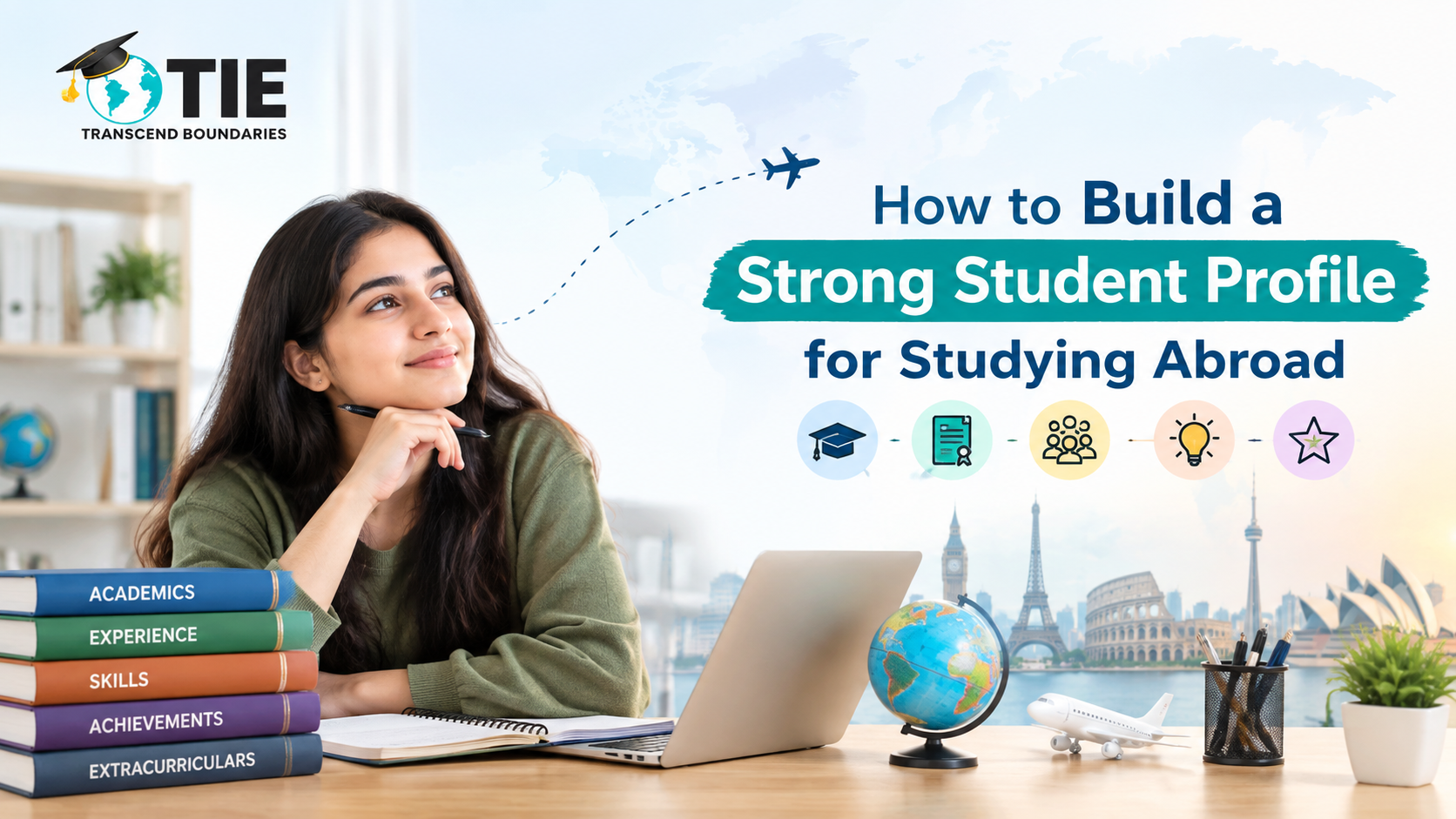
How to Build a Strong Student Profile for Studying Abroad
Taksheela Team
Taksheela Institute of Education
If someone removed the certificates from your CV, what would be left? Your answer can tell you quite a lot about your current profile. Universities may want to see more than academic results and completed courses.
Your projects, activities, practical experiences, interests, and application documents can all add context to your application. Building a student profile for study abroad means developing that substance before you start worrying about how impressive the final CV looks.
What Do Admissions Officers Notice in a Student Profile?
There is no single formula that makes an application successful. Depending on the course, institution, and level of study, universities can look at different aspects of a student’s background.
These may include:
Academic performance
Relevant subjects and projects
Achievements and competitions
Extracurricular activities
Work or internship experience
Academic or professional interests
SOP and LOR
English-language or entrance test results, where applicable
The significance of each component can vary. A student applying for a research program may have to demonstrate an academic or research interest, and one applying for a practical program may have relevant work experience.
The goal is not to make every part of your application look extraordinary. It is to provide genuine information that helps the university understand your preparation for the program.
Can You Find a Pattern in Your Existing Experiences?
Before adding anything new, look at what you have already done.
You may find that several activities point towards a particular subject or interest. For example, a student interested in business might have participated in an entrepreneurship competition, helped organize a college event, completed a business-related project, and worked on a small online venture.
Those experiences don't have to be identical. Together, they can show how an interest developed over time.
Try listing your existing:
Academic projects
Competitions
Volunteering
Clubs or societies
Part-time work
Internships
Independent projects
Subject-related courses
Then ask what each experience taught you and what role you played.
This exercise can also show where your profile needs development before you begin applying.
Are You Collecting Certificates or Building Evidence?
Completing an online course gives you a certificate. But the certificate itself says little about how you used what you learned.
For example, a student interested in programming could complete a coding course and stop there. Another student could use the same knowledge to build a small application, contribute to a project, or solve a practical problem.
The second experience gives the student something more substantial to discuss.
That doesn’t mean certificates are a waste of time. Relevant courses help students to build knowledge and to show initiative. But students should learn to look at what they have gained from an experience rather than only counting the number of certificates they have.
What Should You Do If Your Profile Has a Gap?
Not every student has internships, leadership positions, national-level competitions, or years of volunteering.
If there’s a gap in your profile, don’t try to fill it with random activities right before applying.
Rather, think about what is practical for you.
For example, a student who lacks practical experience can try:
An internship
A project connected to the course
A competition
Volunteering
Assisting in research
An independent project
Students who already have several activities may not need more. They may benefit more from developing one existing experience in greater depth.
Academic weaknesses are no different. If your grades are not as strong as you hoped, your entire academic record and other experiences can provide additional context. But they must be presented honestly, not hidden behind other achievements.
How Do Internships Add Weight to a Student Profile?
An internship can give students exposure to a workplace and help them understand how their subject is applied outside the classroom.
But simply writing an organization's name and internship title on your CV isn't enough.
Keep track of:
What responsibilities you handled
Which skills you developed
What tasks you contributed to
What problems you encountered
What you learned from the experience
A short internship where you had genuine responsibilities can give you more to discuss than a longer placement where you simply observed others.
For students preparing for university admissions, this practical experience can also help them explain their academic interests more clearly.
Can Your SOP and LOR Strengthen the Same Story?
Your SOP and LOR serve different purposes, but they can provide useful context around the rest of your application.
Your SOP gives you the opportunity to explain your academic interests, experiences, reasons for choosing the program, and future plans.
An LOR, meanwhile, provides an academic or professional perspective from someone who has worked with or taught you.
Students should therefore choose their examples carefully. Instead of repeating information already visible on the CV, use the SOP to explain your decisions and use the LOR to provide specific observations about your abilities or potential.
Both should remain genuine and specific to the student.
What Happens When Your Profile Doesn't Match Your Course?
Sometimes a student has a great profile but applies for a course which seems to have no relationship to their previous education or experience.
A change of direction isn't automatically a problem. Students may have valid reasons for changing fields, especially at postgraduate level.
The important part is being able to explain the transition.
For example, you may have studied commerce before, but now you want to do data analytics; you may have to explain why you changed and what steps you have taken to prepare for the new field.
This is where academic projects, relevant courses, internships, work experience, and the SOP can become particularly useful.
How Can You Make Your Profile Stronger Without Starting From Scratch?
You may already have more useful material than you realize.
Review your existing experiences and identify those that can be developed further.
You could:
Expand an academic project into independent research
Take greater responsibility in an existing activity
Build a portfolio from previous work
Continue an internship-related project
Participate in a relevant competition
Document achievements and responsibilities properly
Keep records as you go. Dates, responsibilities, outcomes, certificates, project links, and other evidence can become useful when preparing applications later.
What Should You Never Fake or Overdo in a Student Profile?
Trying to make a profile look impressive can lead students in the wrong direction.
Do not:
Include those activities in which you have just participated minimally
Over-exaggerate your position in an internship or project
Purchase certificates for things you do not know about
Copy another person’s SOP
Make up accomplishments or achievements
Claim skills that you cannot showcase
Universities may ask you questions regarding your experience. It is better to have fewer genuine experiences that you can discuss confidently.
How Can Taksheela Institute Of Education Help You Build a Better Application?
We at Taksheela Institute of Education can assist students in reviewing their academic background, experiences, course preferences, and application requirements before they apply.
Advice could also include identifying what areas require development, selecting appropriate courses and universities, preparing application materials, and familiarizing oneself with the application process.
Professionals' expertise could help students considering study abroad to integrate their experiences, not replace their experiences.
Students looking for abroad education consultants in India should still be involved in every major decision and verify important university and application information independently.
What Should a Strong Student Profile Ultimately Show?
A strong profile doesn't have to be filled with achievements. It should give universities enough information to understand your academic preparation, interests, experiences, and motivation for the course you're applying to.
Start early, develop experiences that are meaningful to you, keep evidence of what you've done, and give yourself time to improve weaker areas.
Most importantly, don't wait until applications open to start thinking about your student profile for study abroad. The strongest parts of your profile are usually built long before the application form appears.
Frequently Asked Questions
Not always. The significance of these depends on the university, the course, and the level of study.
It can be a plus for some profiles but not necessarily a must for all programs.
Work on relevant academic or practical experience and be honest about your full background.
Yes. Even if you are getting professional input, your SOP should reflect your own experiences, motivations, and plans.
Ideally, well before applications open so you have time to develop relevant experiences and prepare your documents.
Free MBBS Counselling
Find the Right Country for Your MBBS in 2026
Our MBBS specialists analyse your NEET score, budget and career goals to recommend the right university — at zero cost to you.
Related Articles
Planning your study abroad journey?
Get free expert counselling from Taksheela — trusted by thousands of Indian students for admissions, visas, and test prep.
You May Also Like
More Study Abroad & Education Guides



Study Abroad Journey: A Complete Guide for Students from Bhubaneswar
29 Aug 2026 · 15 min