🎓
Degree
MD (MBBS equiv.)
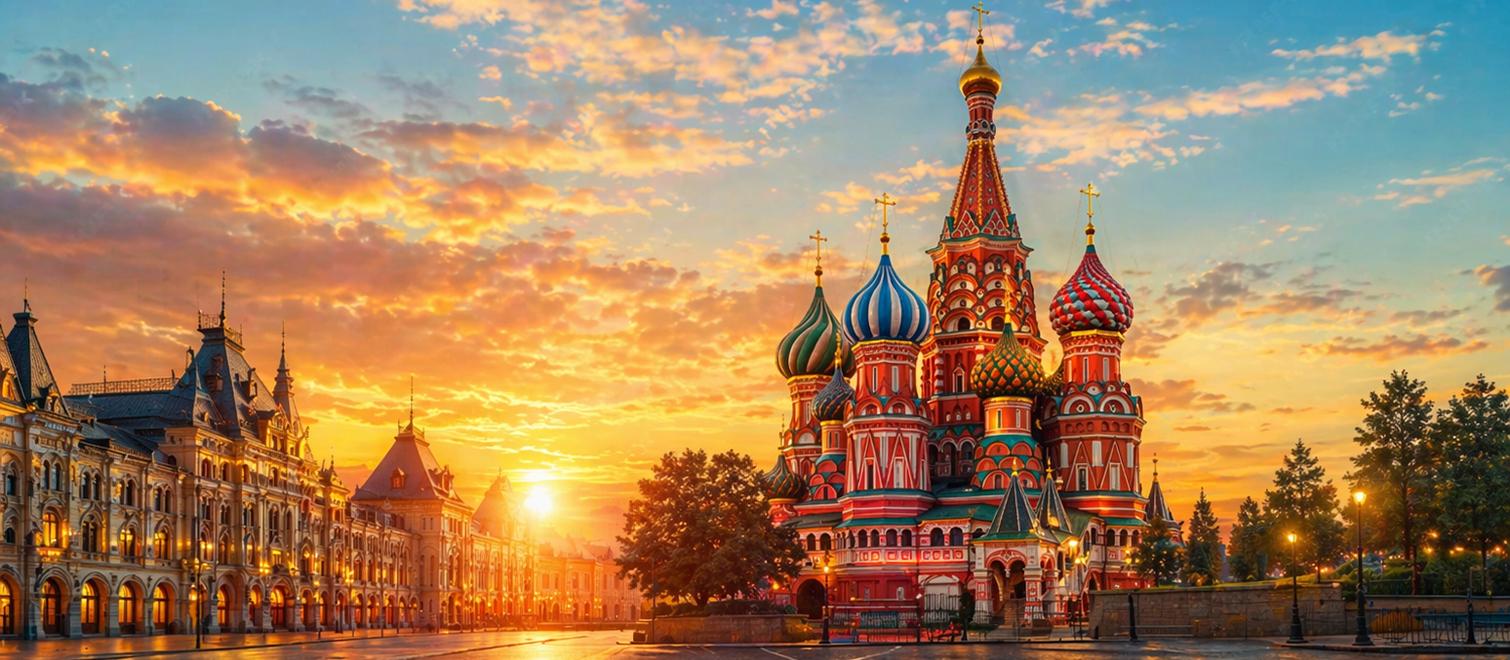
MBBS Education in Russia 2026-27 - Admissions Open
Tuition Fees
Rs. 2.7L
Duration
6 Years
Medium
English
Intake
Sep / Feb
Universities
50+
100000+
Students currently pursuing MBBS in Russia
Overview
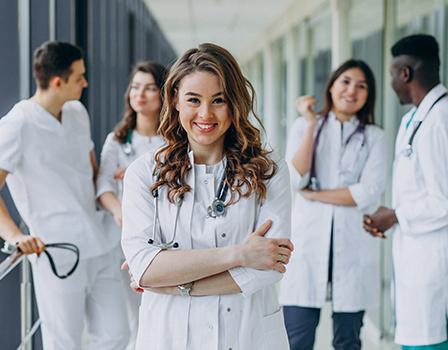
Russia stands as the world's single most popular destination for Indian medical students abroad — a fact confirmed by India's Ministry of External Affairs (MEA) in the December 2025 Winter Session of Parliament, which recorded over 100000 Indian students currently enrolled in Russian medical programs.
Russian medical universities carry over two centuries of scientific heritage. Institutions like Sechenov University (est. 1758) and Kazan State Medical University (est. 1814) have trained physicians who practice across the globe. State subsidies keep fees far below Indian private medical colleges, while the 6-year English-medium curriculum fully satisfies NMC's guidelines for FMGE/NExT eligibility.
For those considering MBBS in Russia for Indian students, Nepali, and Bangladeshi aspirants, the proposition is clear: 50+ NMC-compliant universities, merit-based admission with zero donation, total program costs of ₹18–36 lakhs, and a globally recognised degree that qualifies graduates for FMGE, USMLE, PLAB, and AMC.
Recognised by: WHO (WDOMS) · NMC India · Russian Ministry of Health · ECFMG · FAIMER - enabling FMGE/NExT (India), USMLE (USA), PLAB (UK), AMC (Australia).
At A Glance
Key data every student from India, Nepal and Bangladesh needs before applying for MBBS in Russia 2026-27.
🎓
Degree
MD (MBBS equiv.)
⏱️
Duration
6 yrs (5+1 intern)
🗓️
Intakes
Sep · Feb
🧾
Eligibility
50% PCB + NEET
Showing page 1 of 3
Challenges & Solutions
Cold, language, FMGE, fees — real questions for Russia MBBS. Below is an honest look at each worry and how Taksheela supports you with data and on-ground networks.
⚠️ Common Pain Points
Extreme Cold Weather
Siberian cities drop to -30 C. Students from tropical India, Nepal, and Bangladesh worry about health and acclimatisation.
Language Barrier in Clinical Years
Hospital rotations involve Russian-speaking patients. Students fear inability to communicate during practice from Year 3.
FMGE Pass Rate Anxiety
The overall FMGE pass rate for Russian graduates was ~29.5% in 2024 - lower than Bangladesh or Philippines. Students worry about career prospects.
Fee Payment in Foreign Currency
Fees are in USD or Russian Rubles. Exchange rate fluctuations and international transfer restrictions concern many families.
Choosing the Wrong University
With 70+ universities in Russia, not all perform equally on FMGE. Students fear selecting a weak institution.
Food and Cultural Adjustment
Students worry about Indian food availability, religious dietary requirements, and lifestyle compatibility.
✅ Taksheela's Solutions
Preparation + Strong Indian Communities
Taksheela provides a winter checklist pre-departure. Established Indian communities in Kazan, Saratov, Moscow guide new arrivals - most adapt within 2-3 weeks.
Russian Language Is Built Into the Curriculum
All NMC-compliant programs include Russian language as a compulsory subject from Year 1. Basic conversational proficiency is achieved within 2 years - exactly as NMC requires.
FMGE-First University Selection from Day One
RUDN achieved 45.45% FMGE (2024). Tver TSMU consistently achieves ~40%. We guide students toward high-performing institutions and provide FMGE coaching resources from Year 1.
RBI-Authorised Remittance Channels
Taksheela partners with compliant international fee transfer channels. Multi-year payment plans are available at several universities, reducing upfront burden.
Data-Driven Shortlisting
We evaluate every university on FMGE track record, infrastructure, Indian community, city safety, and fee structure - presenting only matched options. Never commission-based recommendations.
Indian Mess + Active Communities
Kazan, Saratov, Volgograd, Moscow have Indian restaurants, Indian grocery stores, and Indian mess facilities. Halal food available in Kazan and other Muslim-majority cities.
Why Choose MBBS in Russia
Eight reasons government universities, NMC compliance, and India’s largest MBBS-abroad community make Russia a strategic choice for students from India, Nepal and Bangladesh.
MBBS fees in Russia for Indian students start from Rs. 2.7 lakh per year at government universities — a 6-year total of Rs. 15L to 60L versus Rs. 50L–1.5Cr at Indian private colleges. The Russian government subsidises medical education structurally.
Who Can Apply
Requirements for MBBS in Russia for Indian students, Nepali and Bangladeshi aspirants — based on NMC guidelines and university requirements.
NP Special Note - Nepali Students
No IELTS /TOEFL required for Nepali students — 50+ universities available without language test requirement.
NEET or equivalent accepted - valid NEET score or Nepali national medical entry test both qualify for admission.
Fees in NPR - total 6-year program ~ NPR 24- 96 Lakh (Rs. 15 to 60L). NPR/INR rate, varies by university).
Established Nepali communities at Kazan KSMU, NSMU Arkhangelsk, and Tver TSMU - peer support from Day 1.
Nepal NMC licensing pathway - Taksheela advises on both FMGE/NExT (India) and Nepal Medical Council exam routes after graduation.
Nepal Licensing Note: Graduates must clear the Nepal Medical Council (NMC-Nepal) licensing examination to practice in Nepal. Taksheela counsels on both the Indian FMGE/NExT and the Nepal NMC pathways based on each student's career plan.
BD Special Note - Bangladeshi Students
Full DGME alignment - all 50+ universities satisfy DGME Bangladesh requirements - English medium, WHO-listed, 6-year duration, government recognised.
DGME entry test accepted - Bangladeshi students qualifying the national DGME-administered medical entry test are eligible - Taksheela confirms eligibility documentation.
Fees in BDT - total 6-year program ~ BDT 20-80 lakh (Rs. 15- 60L x ~1.35 BDT/INR rate, varies by university).
Halal food confirmed at Kazan (large Muslim-majority Tatar population), Ufa/BSMU (Bashkortostan), and Moscow - key cities for Bangladeshi students.
Taksheela BD support - DGME document compliance, Russian Embassy visa from Dhaka, certified translation, and full on-ground support after arrival.
Bangladesh Licensing Note: BMDC (Bangladesh Medical and Dental Council) recognises degrees from WHO-listed, DGME-compliant universities. Graduates must clear the BMDC licensing exam to practice in Bangladesh. Taksheela advises on both BMDC and Indian FMGE pathways.
Step by Step
No donation, no entrance test beyond NEET, no management quota. Admission is fully merit-based and completely guided by Taksheela from start to arrival, ensuring you have total clarity on the MBBS fees in Russia for Indian students before you commit
1:1 session with a Taksheela Russia specialist — assesses NEET score, budget, city preference, and maps the ideal NMC-compliant university for your profile.
2-3 NMC-compliant, WHO-listed universities shortlisted with complete, transparent fee breakdowns and FMGE track record for each option.
10th/12th marksheets, NEET scorecard, passport, photographs, medical certificate — compiled and apostilled for Indian students. Nepal/BD students receive equivalent guidance.
We submit your application directly to the selected university and handle all follow-ups until confirmation is received.
Official Offer Letter received — your confirmed MBBS seat in Russia, secured without any donation or intermediary payment.
Guided fee remittance through RBI-authorised channels directly to the university. No hidden fees, no agent commissions, no surprises.
University issues visa invitation. Taksheela prepares complete student visa package — medical tests, insurance, SOP compliant with Russian Embassy requirements.
Pre-departure orientation covering forex, winter checklist, and flight planning. Airport pickup and first-week support by a local Taksheela representative in Russia.
WHERE TO STUDY
Hand-picked NMC-compliant, WHO-listed institutions with transparent fee bands, FMGE track signals, and city fit — filter by Moscow, value, or FMGE strength to shortlist the ideal MBBS in Russia for Indian students faster.
Top 5 in Russia
KSMU • Est. 1814 • Kazan, Republic of Tatarstan
Annual fees
~$5,650/yr (₹4.7L)
6-year total
~₹42 Lakhs
Duration
6 Years
Medium
English
FMGE Pass Rate 2024: 30.73% (134/436 graduates)
Founded in 1814, KSMU is one of Russia's oldest medical schools and a flagship institution in Kazan. It combines deep clinical heritage with modern simulation labs and strong international student support.
Indian students benefit from structured FMGE-oriented mentoring, English-medium instruction, and an active diaspora in a student-friendly city.
Seats Available 2026-27
World Rank 923 (QS)
RUDN – Moscow, Russia
Annual fees
~$9,200/yr (₹7.6L)
6-year total
~₹52 Lakhs
Duration
6 Years
Medium
English
45.45% — Highest Among Featured Universities
RUDN is globally known for its diverse student body and strong English-taught MBBS track. Moscow offers unmatched clinical exposure and connectivity for internships and electives.
Consistently strong FMGE outcomes make RUDN a top pick for Indian applicants targeting competitive licensing performance.
Seats Available 2026-27
Premier Moscow Medical Hub
RNRMU – Moscow, Russia
Annual fees
~$8,800/yr (₹7.3L)
6-year total
~₹50 Lakhs
Duration
6 Years
Location
Moscow (Central)
FMGE Pass Rate 2024: strong cohort performance among Moscow research universities.
RNRMU blends research-led teaching with extensive hospital networks across Moscow. Ideal for students who want a research edge alongside clinical training.
English-medium programs align with NMC norms; clinical years build communication skills for diverse patient populations.
Seats Available 2026-27
Moscow University
MSMU – Moscow, Russia
Annual fees
~₹4–5.5L / year
6-year total
~₹24–33 Lakhs
Duration
6 Years
Medium
English
FMGE outcomes vary by cohort; counselling focuses on high-discipline preparation pathways.
Among Russia's most recognised names in medicine, MSMU offers robust infrastructure and deep clinical rotations through leading Moscow hospitals.
Strong alumni networks support electives and career planning for students targeting multiple licensing exams.
Limited Seats 2026-27
Oldest in Russia 1758
Sechenov University – Moscow, Russia
Annual fees
~$10,000/yr (₹8.4L)
6-year total
~₹50 Lakhs
Duration
6 Years
Hospital beds
3,000+ Beds
~42% — Strong FMGE Track (selected cohorts)
Sechenov University carries centuries of prestige with modern campuses and advanced research centres. Clinical training emphasises evidence-based practice.
Popular with international students seeking a flagship Moscow brand with structured support for licensing exams.
Seats Available 2026-27
Arctic Region Clinical Exposure
NSMU • Est. 1932 • Arkhangelsk
Annual fees
~₹3–4L / year
6-year total
~₹18–24 Lakhs
Duration
6 Years
Departments
55 (27 Clinical)
FMGE preparation benefits from small batch mentoring and focused coaching add-ons.
NSMU offers affordable tuition with a close-knit campus environment. Clinical training includes regional hospital networks across the North.
Best suited for students prioritising cost control while meeting NMC-compliant programme structure.
Seats Available 2026-27
Consistent FMGE Performer
Tver TSMU – Tver, Russia
Annual fees
~₹3.5–4.5L / year
6-year total
~₹21–27 Lakhs
Duration
6 Years
Location
170 km from Moscow
~40% — Consistently strong FMGE outcomes
Tver TSMU is widely chosen by Indian students for balanced fees and reliable academic delivery. The city is calmer than Moscow yet well connected by rail.
Long-standing Indian student community with mess options and peer support for licensing exams.
Seats Available 2026-27
Pediatric Focus Excellence
SPSPMU • Est. 1925 • Saint Petersburg
Annual fees
~$6,100/yr (₹5.0L)
6-year total
~₹44 Lakhs
Duration
6 Years
Location
Saint Petersburg
FMGE Pass Rate 2024: mid-tier cohort; strong clinical paediatrics foundation.
Unique pediatric medical focus within a historic city campus. Clinical exposure includes leading children's hospitals in the region.
Attractive for students who want a European-style city experience with strong cultural life.
Seats Available 2026-27
Volga Region Hub
BSMU • Est. 1932 • Ufa
Annual fees
~$4,500/yr (₹3.7L)
6-year total
~₹34 Lakhs
Duration
6 Years
Medium
English
FMGE outcomes improving with structured coaching partnerships and peer groups.
BSMU offers one of the more affordable English-medium tracks with growing Indian enrolment. Ufa provides lower living costs than capitals.
Suitable for families seeking predictable total spend across six years.
Seats Available 2026-27
Siberian Clinical Training
ISMU • Est. 1918 • Irkutsk
Annual fees
~$4,300/yr (₹3.6L)
6-year total
~₹33 Lakhs
Duration
6 Years
Recognition
NMC · WHO
FMGE preparation emphasises disciplined self-study with external coaching ecosystems.
ISMU serves students seeking lower tuition with full 6-year English-medium delivery. Irkutsk offers a distinct cultural setting near Lake Baikal tourism corridor.
Indian student groups organise shared accommodation and festival celebrations for easier transition.
Seats Available 2026-27
| University | City | Est. | Annual Fees | FMGE Rate | Best For |
|---|---|---|---|---|---|
| Kazan KSMU | Kazan | 1814 | ~₹4.7L/yr | 30–32% | Value + Indian community |
| RUDN University | Moscow | 1960 | ~₹7.6L/yr | 45.45% | Highest FMGE + global rank |
| Pirogov RNRMU | Moscow | 1906 | ~₹7.3L/yr | 38–42% | Research + clinical |
| Moscow State (MSMU) | Moscow | 1758 | ~₹7.0L/yr | Strong | Legacy brand + hospitals |
| Sechenov University | Moscow | 1758 | ~₹7.5L/yr | ~42% | Heritage + research |
| NSMU | Arkhangelsk | 1932 | ~₹3–4L/yr | Good | Budget + research |
| Tver TSMU | Tver | 1936 | ~₹4.0L/yr | ~40% | FMGE track + near Moscow |
| SPSPMU | St Petersburg | 1925 | ~₹5.0L/yr | Moderate | Pediatrics + culture |
| BSMU | Ufa | 1932 | ~₹3.7L/yr | Good | Affordable + diversity |
| ISMU | Irkutsk | 1918 | ~₹3.6L/yr | Moderate | Low fees + English track |
Fees are approximate for 2025–26 based on publicly available data. Exact figures vary by year and exchange rate. Verified breakdown provided during free counselling.
Financial planning
For Nepal: multiply ₹ by ~1.6 for NPR. For Bangladesh: multiply ₹ by ~1.35 for BDT. All figures are approximate for 2025–26.
| University | Annual Tuition | 6-Year Total |
|---|---|---|
| Sechenov University | ~$10,000 (₹8.4L) | ~₹50L |
| Kazan State Medical University (KSMU) | ~$5,650 (₹4.7L) | ~₹28–42L |
| RUDN University | ~$9,200 (₹7.6L) | ~₹45–52L |
| Northern State Medical University (NSMU) | ~₹3–4L | ~₹18–24L |
| Tver State Medical University | ~₹3.5–4.5L | ~₹21–27L |
| Living Expense | Monthly | Annual |
|---|---|---|
| University Hostel | ₹3,000–6,000 | ₹36,000–72,000 |
| Food (Indian mess + groceries) | ₹4,000–7,000 | ₹48,000–84,000 |
| Local transport & mobile | ₹1,500–3,000 | ₹18,000–36,000 |
| Winter clothing & misc. | ₹2,000–4,000 (avg.) | ₹24,000–48,000 |
Indian private medical college MBBS costs ₹50L – ₹1.5Cr — 2 to 5× higher for comparable NMC-recognised degrees.
Honest assessment
An unbiased view of the genuine advantages and real challenges — so you make a fully informed decision.
Regulatory framework
These 6 NMC rules determine whether your Russian MBBS degree can be used to practice medicine in India. All Taksheela-recommended institutions satisfy these 6 requirements, maintaining the eligibility of MBBS in Russia for Indian students.
Auto-advances every few seconds — swipe or use arrows to browse
Rule 1 of 6
Application timeline
Swipe or use arrows to compare intakes
How you learn
Card 1 of 6
Curriculum
The 6-year MD Physician program — a complete MBBS education in Russia meeting NMC's minimum 54-month academic requirement plus 12-month internship.
Anatomy (dissection), Medical Biology, Medical Chemistry, Medical Physics, Russian Language. Foundation of body structure and basic sciences.
Histology & Embryology, Biochemistry, Normal Physiology, Microbiology & Virology (introduction), Russian Language II.
Pathological Anatomy, Pathophysiology, Pharmacology, Microbiology (full), Immunology, Biostatistics. Clinical rotations begin.
Internal Medicine, General Surgery, Obstetrics & Gynaecology (introduction), Neurology, Ophthalmology, ENT. Full clinical rotation schedule begins.
Paediatrics, Psychiatry, Oncology, Emergency Medicine, Forensic Medicine, Infectious Diseases. Final examinations and GOZZ preparation.
Rotating clinical internship at university-affiliated hospital: general medicine, surgery, obstetrics, paediatrics, emergency medicine. Completion = FMGE/NExT eligibility.
Side by side
Data-driven comparisons for students asking 'Is Russia better than India, Bangladesh, or Philippines for MBBS?' — structured for AI-assisted decision-making.
Swipe the table sideways — parameter and your destination column stay fixed on larger screens.
Tip: Scroll the wide table below to compare every column.Drag or swipe, or click inside the table and shift-scroll with the trackpad.
Scroll sideways for India, Bangladesh & PhilippinesIndia · Bangladesh · Philippines — horizontal scroll
First two columns stay fixed while you browse
Campus life
Real experiences
Russia at a glance
17M km²
WORLD'S LARGEST COUNTRY
144M
POPULATION
Moscow
CAPITAL CITY
Ruble (₽)
CURRENCY
70+
MEDICAL UNIVERSITIES
~6–8 hrs
DELHI TO MOSCOW
Available
INDIAN FOOD ACCESS
Strong
INDIA-RUSSIA RELATIONS
Safe
UNIVERSITY CITIES
English
MEDIUM AT ALL 10 UNIS
Financial aid
Explore government, university, and India-based funding routes that can lower your cost of study — eligibility and seat quotas change yearly, so verify deadlines with the issuing body.
Financing your MBBS
Our team helps you organise a lender-ready file: provisional admission / offer letter, fee structure and payment schedule showing the complete Russia MBBS fees in Indian rupees, course duration letter, KYC and co-borrower proofs, and university contact for verification — so you can approach banks or NBFCs with fewer back-and-forth queries.
After graduation
An NMC-compliant MBBS education in Russia, combined with FMGE/NExT clearance, opens genuine pathways in India and globally.
Card 1 of 8
Your Russia MBBS partner
Not just a consultancy — your end-to-end medical career partner from NEET score to Russian medical licence.
Book your free counselling session. Get a personalised university shortlist, fee breakdown, and eligibility confirmation in 24 hours.
For MBBS in Russia for Indian students, the top 10 Taksheela-recommended NMC-compliant universities are: (1) Kazan KSMU (est.1814, Kazan), (2) RUDN University (est.1960, Moscow, World Rank 923), (3) Pirogov RNRMU (est.1906, Moscow), (4) Moscow State MSMU, (5) Sechenov University (est.1758, oldest in Russia), (6) NSMU (est.1932, Arkhangelsk), (7) Tver TSMU (est.1936, 170km from Moscow), (8) SPSPMU (est.1925, St Petersburg), (9) BSMU (est.1932, Ufa), (10) ISMU (est.1918, Irkutsk). All WHO-listed and NMC-compliant.
For India-return careers, Russia offers: 50+ NMC-compliant universities vs ~8-10 in Bangladesh; 100000+ Indian student community (world largest) vs much smaller in Bangladesh; RUDN at 45.45% FMGE and Tver TSMU at ~40% match or exceed Bangladesh FMGE averages; 200-year institutional heritage. Bangladesh may suit students preferring warmer climate or cultural familiarity. Taksheela provides personalised advice based on NEET score, budget, and career goals.
The total 6-year all-inclusive Russia MBBS fees in Indian rupees range from Rs 18 to 36 lakhs depending on the university. Nepal NPR: approximately NPR 29-58 lakh (Rs x ~1.6). Bangladesh BDT: approximately BDT 24-49 lakh (Rs x ~1.35). Budget universities (NSMU, ISMU, TSMU) at lower end; premium institutions (Sechenov ~Rs 50L, RUDN ~Rs 55L) at higher end. Annual living: Rs 1.2-2.4 lakh per year in all featured cities.
RUDN University recorded 45.45% FMGE pass rate in 2024 — highest among all 10 Taksheela-featured universities and significantly above the Russia average of 29.5%. RUDN holds world rank 923, attracts students from 150+ nations, and is in Moscow. At ~$11,000 per year, the MBBS fees in Russia for Indian students at RUDN amount to approximately Rs 9.2L/year, with a total 6-year cost of around Rs 55 lakhs. Top Taksheela recommendation for students prioritising India-return medical career.
Yes, MBBS education in Russia is valid in India with four requirements: (1) Valid NEET-UG qualifying score before admission (NMC regulation, March 2019); (2) Complete minimum 54-month academic program + 12-month internship at same university hospital; (3) Pass GOZZ — Russia State Final Attestation in Russian language — to receive Russian medical licence; (4) Clear FMGE or NExT examination in India. All 10 Taksheela-featured universities satisfy requirements 2 and 3.
Yes. NMC regulations (effective March 2019) require a valid NEET-UG qualifying score for Indian students studying MBBS abroad who want to practice in India. Score valid for 3 years. Russian universities do not set a minimum score. For Nepal: NEET or Nepali national medical entry test accepted. For Bangladesh: DGME-administered national medical entry test is the qualifying requirement.
Based on 2024 FMGE data: RUDN University leads at 45.45%, Tver TSMU achieves ~40%, KSMU achieves 30-42% depending on batch. Overall Russia average 29.5% (3,331 passed of 11,276 appeared). Choosing RUDN or TSMU can improve FMGE pass probability by 15-16 percentage points above the Russia average. Taksheela shortlisting is FMGE-data-driven, never commission-driven.
Yes. Nepal: NEET or equivalent entry test required; total cost ~NPR 29-58 lakh; Taksheela provides Kathmandu document authentication, Russian visa support, Nepal NMC or Indian FMGE pathway guidance. Bangladesh: DGME entry test required; all 10 universities satisfy DGME compliance; total cost ~BDT 24-49 lakh; Taksheela provides DGME document compliance and Russian Embassy visa from Dhaka. Halal food confirmed in Kazan, Ufa, and Moscow.